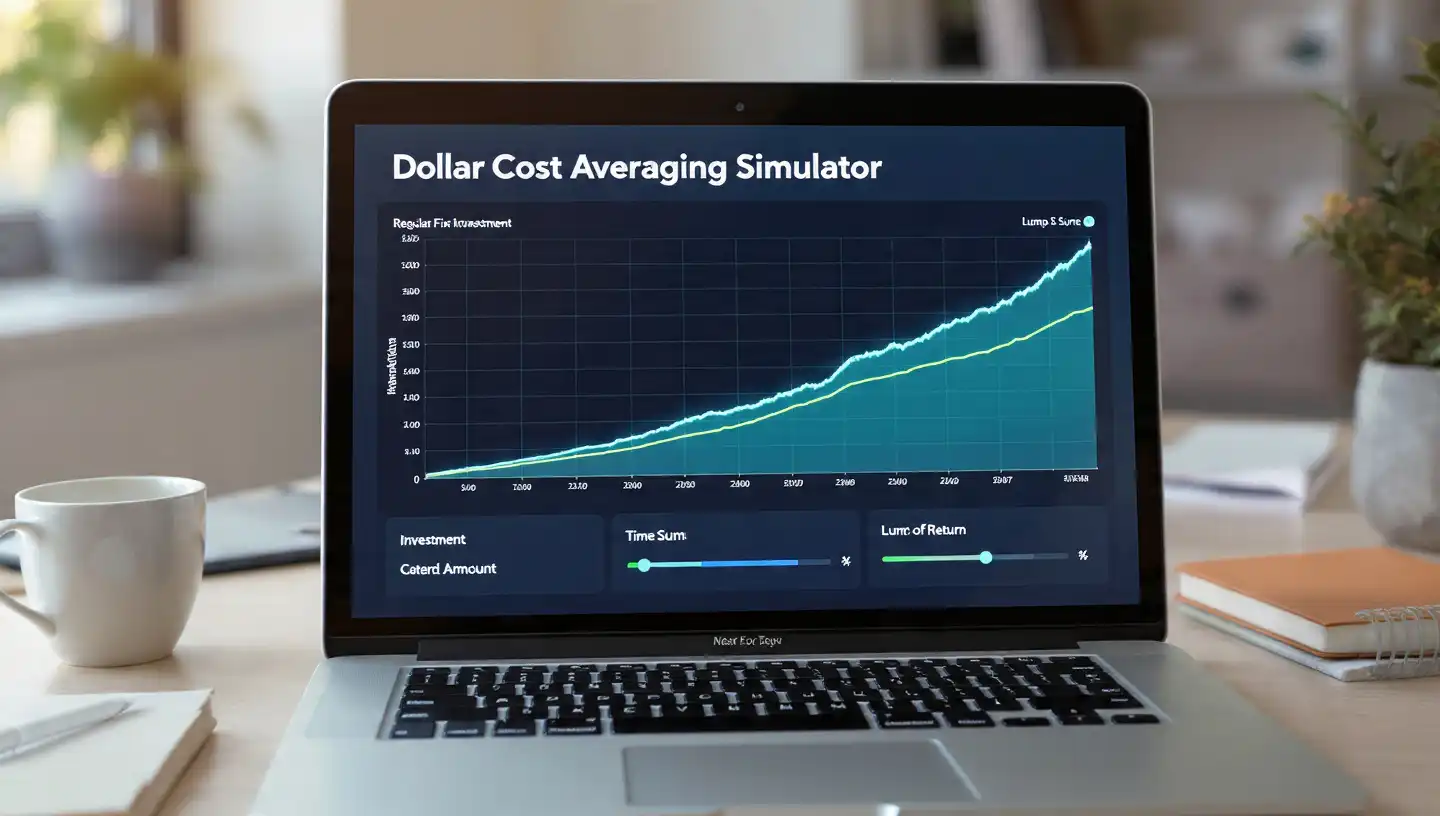
DCA Simulator
See the power of consistent Dollar Cost Averaging over time.
How This Tool Works
Dollar Cost Averaging (DCA) is the practice of investing a fixed dollar amount at regular intervals, regardless of the asset's price. This simulator projects how your portfolio would grow based on your monthly contribution and an estimated growth rate.
- The Math: It sums up your contributions + compounded growth for each period.
- The Advantage: You buy more coins when prices are low and fewer when high, automatically lowering your average entry price.
How to Use
- Monthly Investment: How much spare cash can you invest? (e.g., $500).
- Duration: How many years will you keep this up?
- Expected Growth: Be realistic. The S&P 500 averages 10%. Crypto might do 50% or -50%.
- Initial Lump Sum: Are you starting with a balance?
Example Strategy
You invest $100 every week for 5 years.
Average Growth: 10%/year.
• Total Invested: $26,000
• Portfolio Value: $33,689
• Profit: +$7,689 (ROI: ~30%)
Why This Reduces Risk
Trying to time the bottom is nearly impossible. DCA ensures you never go "all in" at the top. It removes emotions from investing.
Limitations & Disclaimer
• This uses a fixed annual return, which never happens in real life.
Real
markets are volatile.
• Past performance does not guarantee future results.
FAQs
No. If the asset price drops continuously and never recovers, DCA will still result in a loss. DCA only mitigates entry timing risk, not asset risk.
Weekly or Monthly is most common. Buying daily might incur too many transaction fees, while buying yearly misses the point of averaging.
Statistically, Lump Sum often outperforms DCA in a bull market (because you buy early). However, DCA is psychological protection. It prevents you from buying the absolute top and allows you to sleep better at night.